
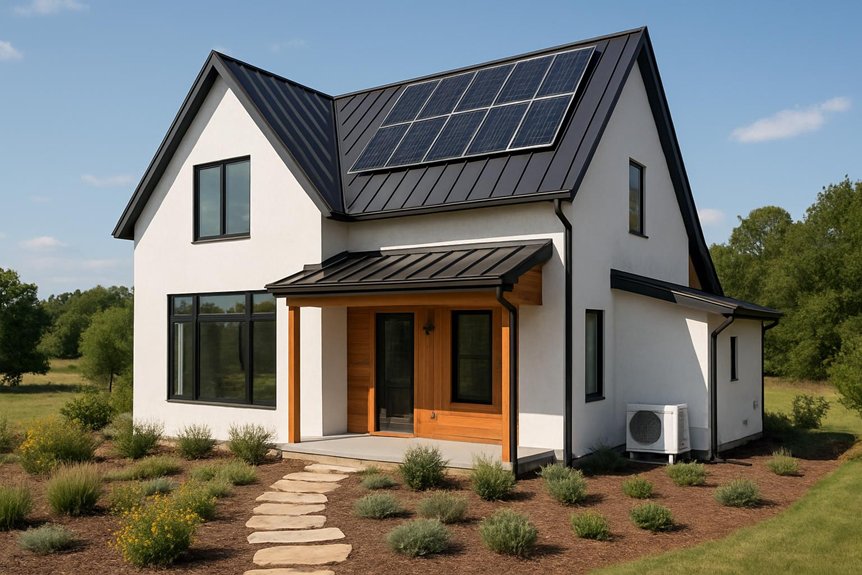
You’ll achieve verified energy savings with North Carolina custom homes featuring 2×6 exterior wall framing, R-19+ insulation, and ENERGY STAR certification through third-party HERS testing. Advanced construction methods include sealed building envelopes, LP TechShield radiant barrier roof sheathing, and high-efficiency HVAC systems that deliver typical HERS scores in the low 60s—representing 35-40% better efficiency than standard homes. These integrated performance measures, combined with optional solar PV systems, can generate $1,000+ annual utility savings while maintaining superior indoor air quality and comfort.
Building Simple and Green: Advanced Construction Methods
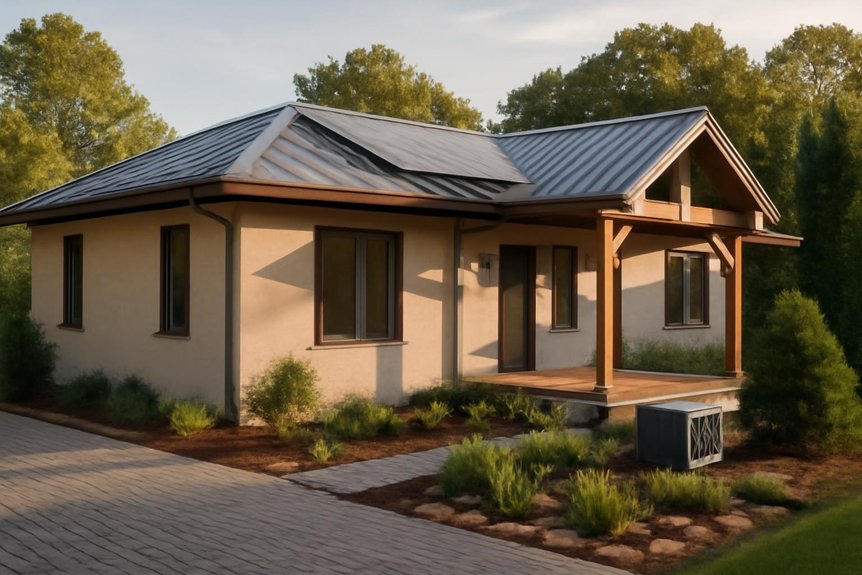
When you’re building an energy-efficient custom home in North Carolina, advanced construction methods form the foundation of superior thermal performance and environmental responsibility. Advanced framing techniques using 2×6 exterior walls with strategic stud spacing reduce lumber consumption while accommodating continuous R-19 insulation. High-efficiency truss systems and prefabricated components minimize on-site waste by up to 75% while accelerating construction timelines.
Sealed building envelopes integrate tightly sealed ducts, air returns, and thorough attic insulation with Low-E windows to achieve ENERGY STAR and NGBS certifications. These systems typically deliver HERS scores in the low 60s, representing 35-40% greater energy efficiency than standard 2006 homes. LP® TechShield® Radiant Barrier Roof Sheathing further improves performance by reducing attic temperatures up to 30°F and cutting air-conditioning costs by 17%.
ENERGY STAR Certification and Third-Party Verification
When you’re building a custom home in North Carolina, ENERGY STAR certification provides measurable validation of your home’s energy performance through rigorous independent testing protocols. As an ENERGY STAR partner, you’ll benefit from third-party verification services that conduct blower door testing, duct leakage assessments, and thorough site audits to guarantee your home meets strict efficiency standards. Your certified home will typically achieve HERS scores in the low-60s, demonstrating 35-40% greater efficiency than standard construction while qualifying for available tax credits and utility incentives.
ENERGY STAR Partner Benefits
Partnership with ENERGY STAR guarantees that every Newphire/Progressive custom home achieves rigorous third-party verified certification standards for energy-efficient design and construction. This partnership delivers measurable energy efficiency benefits through RESNET-trained raters who conduct thorough third party inspection protocols, including blower door testing, duct leakage verification, and HERS score calculations.
Your certified home typically achieves HERS scores in the low 60s, delivering 35-40% greater efficiency than standard 2006 construction. This translates to substantially lower utility bills through advanced building science applications like LP TechShield radiant barrier roof sheathing, Low-E windows, sealed ductwork, and superior insulation systems.
You’ll receive documented certification including verified HERS score results, inspection reports, and performance testing data that confirms your home exceeds local code requirements while meeting ENERGY STAR’s stringent efficiency benchmarks.
Independent Third-Party Testing
Although builder claims about energy efficiency sound impressive on paper, independent third-party verification provides the documented proof you need to trust your investment. RESNET-certified raters conduct thorough on-site inspections, performing blower door/duct leakage testing to validate actual performance against design specifications. This rigorous process guarantees your home’s energy measures are installed correctly and function as intended.
Third-party raters verify HERS Index scores and certify compliance with ENERGY STAR and NGBS standards through diagnostic testing and documentation. Southern Energy Management has provided over 10 years of independent verification for our projects, confirming consistent performance in the low 60s HERS range. This independent oversight reduces construction defects, improves long-term efficiency, and qualifies your home for valuable incentives and tax credits tied to certified program participation.
HERS Score Performance
The HERS Index serves as the gold standard for quantifying residential energy performance, with lower scores indicating superior efficiency compared to a typical 2006 reference home that scores 100. Energy efficient custom homes like those built by Newphire/Cimarron consistently achieve scores in the low 60s, demonstrating 35-40% superior performance versus the reference standard and approximately 20% better efficiency than conventional new construction.
These HOME ENERGY ratings aren’t just estimates—they’re verified through rigorous RESNET-certified testing protocols. Third-party raters conduct thorough evaluations including blower-door testing, duct leakage assessment, and installation verification to make certain accuracy. Your HERS performance directly impacts green certification eligibility, with Net-Zero Ready programs typically requiring HERS ≤55 and full Net-Zero attainment targeting HERS ≤15, making these scores critical for accessing premium sustainability certifications and associated incentives.
Superior Insulation and 2×6 Exterior Wall Construction
Your custom home’s thermal envelope becomes markedly more effective when Cimarron employs 2×6 exterior wall construction instead of standard 2×4 framing, achieving R-19 insulation ratings that exceed ENERGY STAR requirements. You’ll benefit from advanced framing techniques that reduce thermal bridging while creating consistent cavity space for full-depth insulation coverage. This improved wall assembly approach delivers measurable energy efficiency improvements through reduced heat transfer and lower HVAC operational loads throughout North Carolina’s varied climate conditions.
Enhanced Thermal Performance Benefits
When constructing energy-efficient custom homes in North Carolina, 2×6 exterior wall framing delivers measurable thermal performance advantages over conventional 2×4 construction. The increased cavity depth accommodates R-19 insulation, providing 46% higher thermal resistance than standard R-13 installations. This augmented insulation capacity, combined with reduced thermal bridging from fewer structural members, markedly improves your home’s overall envelope performance.
When paired with advanced air sealing techniques, these improvements translate into 20–40% reductions in annual heating and cooling energy consumption compared to typical 2006-era construction. Your home will achieve superior HERS scores—often in the low 60s—demonstrating code-exceeding thermal performance. The deeper wall assembly also provides additional space for mechanical systems and better insulation placement around windows and penetrations, reducing thermal bypasses while improving long-term building durability.
Advanced Framing Techniques
Advanced framing techniques form the structural foundation that maximizes your 2×6 exterior wall system’s thermal performance potential. These optimized methods reduce thermal bridging while accommodating thicker R-19 insulation within your wall cavities.
| Advanced Framing Element | Energy Efficiency Benefit |
|---|---|
| Optimized 24″ stud spacing | Reduces thermal bridges by 33% |
| Single top plates | Increases continuous insulation coverage |
| Insulated headers | Eliminates major thermal weak points |
| Minimal corner framing | Maximizes insulation placement area |
Your 2×6 exterior wall construction paired with advanced framing delivers HERS scores in the low 60s—substantially below code minimums. Improved air sealing becomes more effective with reduced framing members, while strategic lumber placement supports superior insulation performance. This approach reduces material waste and construction costs while meeting North Carolina’s evolving energy codes.
R-19 Energy Efficiency
While standard 2×4 construction limits insulation to R-13 values, R-19 insulation within 2×6 exterior wall cavities delivers 46% greater thermal resistance that directly translates to reduced heat transfer and improved year-round comfort across North Carolina’s diverse climate zones.
The 2×6 exterior wall assembly provides full 5.5-inch cavity depth, accommodating R-19-rated insulation without compression while preserving rated performance values. This deeper framing creates opportunities for augmented air sealing, continuous insulation integration, and systematic routing that minimizes thermal bridging effects.
When combined with Low-E glazing, sealed ductwork, and advanced framing methods, these walls enable ENERGY STAR certification and improved HERS ratings. The cost-effective upgrade from R-13 to R-19 construction notably reduces annual heating and cooling loads, delivering measurable energy efficiency improvements that lower your utility bills throughout the home’s lifecycle.
LP TechShield Radiant Barrier Roof Sheathing Benefits
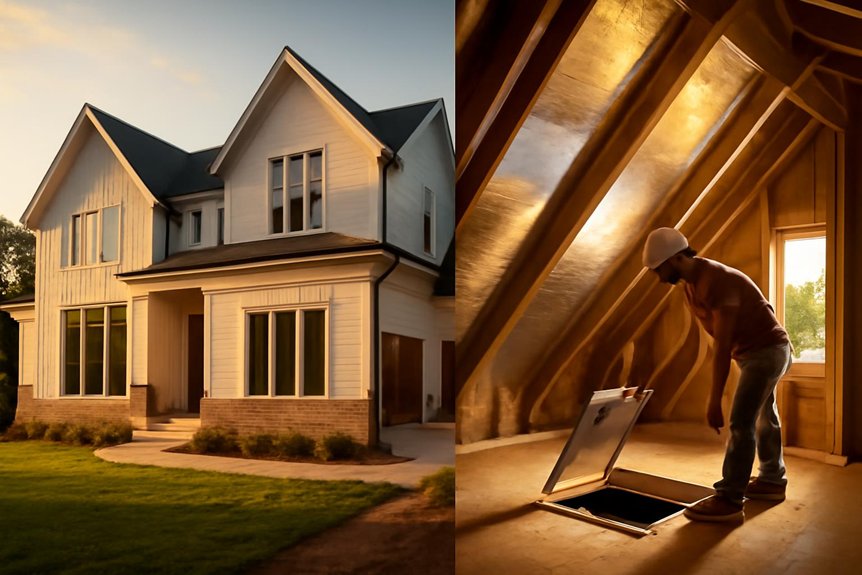
Building energy-efficient custom homes calls for roof assemblies that cut down on radiant heat transfer, and LP® TechShield® Radiant Barrier Roof Sheathing delivers measurable thermal performance improvements. This OSB roof sheathing features factory-applied aluminum lamination that reduces attic temperatures by up to 30°F, directly minimizing heat gain into your living spaces. You’ll achieve up to 17% reduction in air conditioning costs when TechShield® becomes part of your all-encompassing energy-efficient roof assembly.
The radiant barrier technology has earned ENERGY STAR® recognition, helping you meet stringent performance standards. Unlike aftermarket foil installations, this integrated approach simplifies construction while enhancing envelope durability. You can offer homeowners confidence through the optional 20-year transferable limited warranty, potentially increasing resale value while delivering quantifiable energy efficiency improvements.
HERS Index Ratings and Energy Performance Testing
Performance verification through HERS Index testing quantifies the energy efficiency gains achieved by advanced building envelope components like TechShield® radiant barrier sheathing. A certified home energy rater conducts comprehensive evaluations including blower door infiltration tests, duct leakage assessments, and on-site verification of insulation, Low-E windows, and air-sealing measures.
Cimarron/Newphire homes consistently achieve HERS Index scores in the low 60s, demonstrating 35–40% greater energy efficiency compared to typical 2006 homes and 20% improvement over standard new construction. This third-party verification process is mandatory for ENERGY STAR certification and NGBS Green building standards.
The rigorous testing protocol guarantees your home meets performance specifications, with whole-house commissioning validating that integrated systems operate as designed for peak energy efficiency and occupant comfort.
Water Efficiency Features and Low-Flow Fixtures
Your custom home’s water efficiency directly impacts both utility costs and environmental sustainability through strategic fixture selection and flow optimization. MOEN water-saving faucets with integrated aerators achieve 32% water reduction while maintaining peak pressure performance for daily tasks. Complementing these systems, low-flow showerheads and high-efficiency toilet installations create all-encompassing water conservation that meets North Carolina’s building efficiency standards.
MOEN Water-Saving Faucets
Water consumption drops substantially when you install MOEN water-saving faucets throughout your custom home, delivering approximately 32% reduction in faucet water use compared to standard fixtures. These low-flow faucets incorporate flow-restricting aerators that limit output to 1.5–1.8 gallons per minute while maintaining peak pressure and user experience, compared to standard 2.2–2.5 gpm rates.
Your utility bill benefits from this strategic water savings approach, especially when combined with low-flow showerheads and high-efficiency toilets for all-around household conservation. MOEN’s durable construction guarantees reduced maintenance requirements and extended component life, minimizing replacement costs over time.
Installing these fixtures helps qualify your home for water-efficiency credits in green building programs, supporting NGBS and WaterSense certification goals while delivering measurable environmental performance.
Low-Flow Showerhead Benefits
How dramatically can you reduce water consumption while maintaining shower comfort? Low-flow showerheads deliver exceptional performance at 1.6 gallons per minute versus standard 2.5 gpm fixtures, achieving 36% water reduction per shower. You’ll realize immediate water-heating energy savings through decreased hot water demand, directly lowering monthly utility costs while enhancing overall energy efficiency.
Advanced aerating and pressure-compensating technologies maintain strong spray performance despite reduced flow rates. When paired with tankless or high-efficiency water heaters, you’ll achieve 30-45% better water delivery efficiency while reducing cold water waste and wait times.
These WaterSense-equivalent fixtures support Green Homes certifications, qualifying your custom home for local rebates and NGBS/ENERGY STAR program points while meeting North Carolina’s sustainability prerequisites.
High-Efficiency Toilet Systems
Transform your home’s largest indoor water consumer with high-efficiency toilets that slash consumption from legacy 3.5-7 gallon-per-flush models to precision-engineered dual-flush units operating at 0.8/1.6 gpf rates.
| Component | Traditional | High-Efficiency |
|---|---|---|
| Water Usage | 3.5-7 gpf | 0.8/1.6 gpf |
| Annual Savings | Baseline | 20% reduction |
| Compliance Credits | None | NGBS/WaterSense |
These low-flow fixtures deliver measurable water-efficiency improvements when properly specified with pressure-balanced valves and correct trapways. You’ll maintain flushing performance while supporting green home certification requirements. Pairing high-efficiency toilets with tankless hot water systems eliminates cold-water run-off, optimizing whole-home water delivery. Proper installation prevents post-installation complaints while ensuring your investment delivers sustained utility savings and improved Indoor Air quality through reduced humidity from excessive water usage.
Indoor Air Quality and Low-VOC Materials
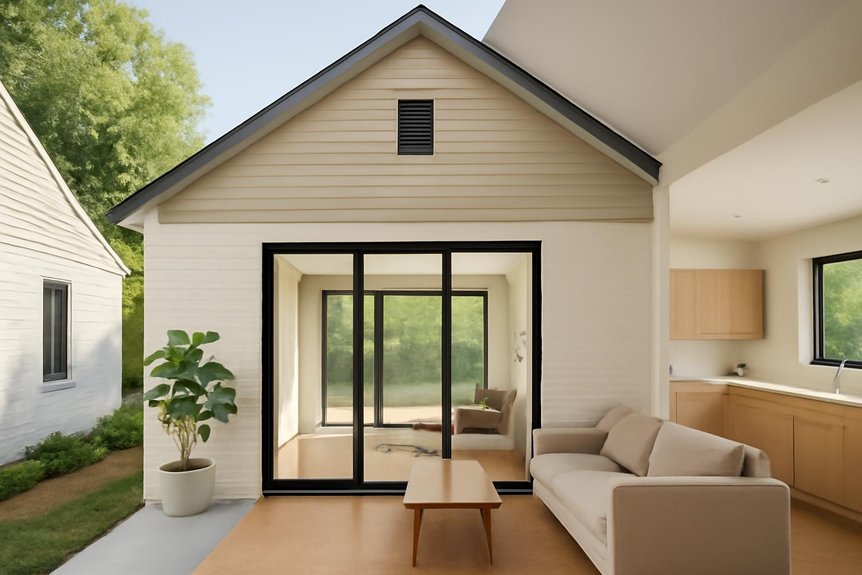
Why settle for basic indoor air quality when custom energy-efficient homes can achieve hospital-grade air purity through strategic material selection and mechanical systems? You’ll markedly reduce chemical exposure by specifying low-VOC paints and Green-labeled carpet combined with proper ventilation strategies. Install whole-home mechanical ventilation systems like ERV or HRV units with pressure-balanced returns to maintain continuous fresh air exchange while controlling humidity and preserving energy efficiency.
High-efficiency Aprilaire air filters capture approximately 97% of pollen-sized particles and 70% of mold spores, dramatically improving particulate removal. You must specify low-emitting materials including sealants, adhesives, and cabinetry to minimize long-term pollutant sources. Design a sealed building envelope with tightly sealed ducts and strategic spot ventilation through timed bath exhausts and range hoods for effective source control and pollutant migration prevention.
Solar Photovoltaic System Options
Design your solar photovoltaic system to match North Carolina’s solar insolation patterns and your home’s energy profile, with array sizing options ranging from partial offset systems covering 10% of consumption to all-encompassing installations achieving net-zero performance. A Net‑Zero Energy Home requires HERS scores ≤15, demanding high-efficiency building envelopes combined with appropriately sized PV arrays. Energy performance modeling should account for LP®TechShield® and similar efficiency measures that reduce AC loads by 17%, minimizing required PV capacity.
Consider net‑zero ready construction (HERS ≤55) for phased solar implementation—you’ll install smaller initial arrays and expand when budgets permit. Coordinate system interconnection with local utilities to maximize net metering benefits and available incentives. Model payback periods against current utility rates and tax credits for ideal ROI on your photovoltaic investment.
Warranty Coverage and Performance Guarantees
Your solar investment’s long-term value depends heavily on thorough warranty protection that extends beyond the panels themselves to encompass your entire energy-efficient building system. Newphire Building provides comprehensive coverage through a 10‑year structural warranty protecting major load-bearing components, while Trane HVAC systems include their own 10‑year warranty covering mechanical failures and performance issues.
Enhanced protection comes through optional LP® TechShield® Radiant Barrier Roof Sheathing, offering up to 20‑year transferable warranty coverage with documented 30°F attic temperature reductions and 17% cooling cost savings. Third-party certifications like ENERGY STAR® and NGBS provide additional performance guarantees, with HERS scores typically reaching the low 60s. Post-construction homeowner manuals outline essential maintenance practices ensuring sustained energy efficiency and warranty compliance throughout your home’s operational life.
Cost Savings and Utility Bill Reductions
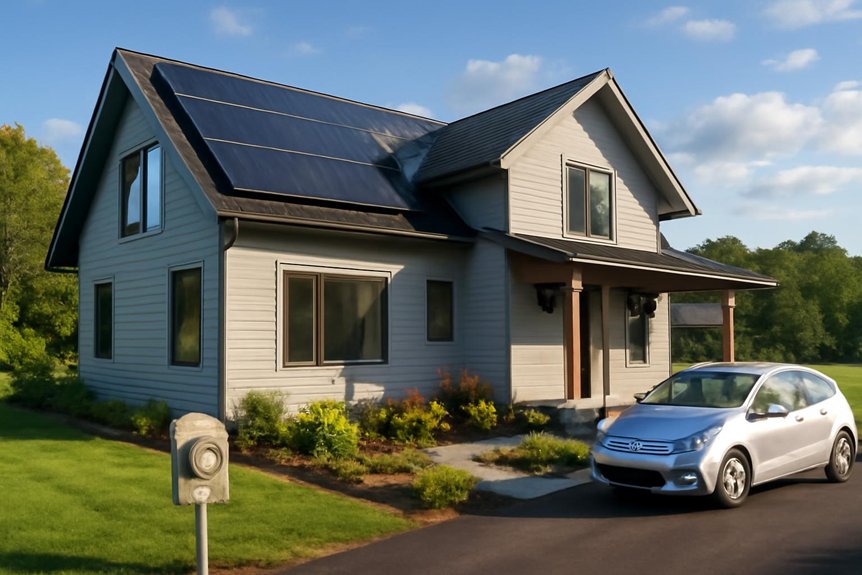
Energy-efficient construction consistently delivers substantial cost reductions that compound over your home’s lifetime, with Cimarron/Newphire homes achieving HERS scores in the low 60s—representing approximately 35-40% greater efficiency than standard 2006 code-built homes. These efficient homes typically generate $1,000+ annual energy bill savings through advanced building envelope performance.
Key cost-reduction systems include:
- Thermal Control Features – 2×6 exterior walls with R-19+ insulation, Low-E windows, and LP®TechShield® Radiant Barrier reducing attic temperatures by 30°F and air-conditioning costs up to 17%
- Water-Saving Fixtures – MOEN faucets (32% savings), low-flow showerheads (40% savings), and high-efficiency toilets (20% savings) cutting water/sewer expenses
- Renewable Energy Integration – Optional solar PV systems combined with high-efficiency Trane HVAC approaching Net-Zero performance, potentially eliminating monthly utility bills entirely
FAQ
What Is the Most Energy-Efficient Manufactured Home?
“Good things come in small packages” rings true with today’s most energy-efficient manufactured homes. You’ll find net zero trailers achieving HERS scores ≤15, while passive houses and tiny homes maximize modular efficiency through R-19+ wall insulation, continuous air sealing, and Low-E windows. These Net-Zero Ready designs combine 2×6 construction, high-efficiency HVAC systems, and optional solar arrays. You’re looking at 20-40% greater efficiency than conventional homes, meeting ENERGY STAR and NGBS code-compliant standards.
Is It Cheaper to Build or Buy a House in North Carolina?
Buying’s typically cheaper upfront in North Carolina, offering immediate buying benefits like lower purchase prices and faster financing options. However, you’ll face higher long term costs through energy bills and maintenance. Building energy-efficient custom homes costs more initially but delivers superior lifecycle value through reduced operating expenses, improved resale value, and code-compliant performance. Your financing options include construction loans, while ENERGY STAR certification and HERS scores below 60 maximize long-term investment returns.
How Much Does It Cost to Build a 10,000 Sq Ft House in North Carolina?
Building a 10,000 sq ft house is like assembling a financial puzzle—you’ll face construction costs of $2.0-$4.0 million for luxury finishes, plus land acquisition expenses. Factor in permit fees, site work, and architectural costs adding 20-40% more. Energy-efficient systems increase upfront investment by 5-15% but deliver long-term utility savings. Your realistic total budget ranges $2.5-$6 million, depending on sustainability certifications and high-performance building envelope specifications you choose.
Can You Build a Custom Home for 300K?
Yes, you can build custom budget homes for $300K in North Carolina with smart planning. Focus on 1,200-1,800 sq ft footprints using 2×6 framing and R-19+ insulation. Consider modular options to reduce labor costs while maintaining energy efficiency. Remember lot costs aren’t included in construction budgets. Investigate financing strategies like construction-to-permanent loans and ENERGY STAR incentives. Target HERS scores in the 50s-60s for peak performance within budget constraints.